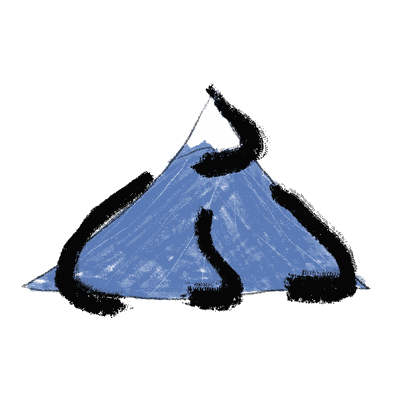
The Japanese alphabet: hiragana and katakana with mnemonic pictures, no rote drilling
11 000+
sentences to practice
600
lessons in 12 units
800+
handpicked words
Methodology
How to learn Japanese: speak it yourself, then check the answer
In every lesson you build and say the sentence first, and see the correct answer second. That is how you learn to speak Japanese instead of just reading about it.
Grammar
1
Learn the rule
N は N です
One of the most important sentence patterns in Japanese is:
[Topic] は [noun] です
This structure is used to say who someone is or what something is. Note the word order: in Japanese it is verb final, which means that the verb always comes at the end of the sentence. Other parts of the sentence have their corresponding default places (e.g. topic comes first), but this order is not strictly fixed and can be changed to convey shades of meaning.
2
Practice on dozens of examples
Tanaka is a student.
Tanaka is a student.
たなかさんはがくせいです。
Tanaka-san wa gakusei desu.
Practice speaking out loud
Before checking the answer, try translating and saying it yourself. That's the moment of learning.
Topics layer onto topics
Every new topic carries the previous ones with it plus a small new piece. That's why nothing falls off.
Dozens of sentences per topic
Dozens of real sentences for every grammar construction, until it comes naturally.
Culture
Culture lessons. Language isn't only grammar
A separate lesson type about culture: etiquette, levels of politeness, congratulations, everyday situations. Same explanations and sentence drills — but the focus shifts from grammar to cultural specifics.
First Meeting
Culture
Japanese has a fixed set of phrases used exclusively at first meetings. They're said together, in a specific order — almost like a ritual. Skipping them would feel rude and out of place.
はじめまして [hajimemashite] — "How do you do." Said at the very start of a first meeting. Always comes first.
よろしくおねがいします [yoroshiku onegaishimasu] — "Nice to meet you." The literal translation misses the meaning — it's a fixed formula said at the end of an introduction.
こちらこそ、よろしくおねがいします [kochira koso, yoroshiku onegaishimasu] — "Likewise." The standard response to よろしくおねがいします.
01
Etiquette & politeness
Greetings, farewells, forms of address, speech registers.
02
Everyday situations
Shops, transit, restaurants, introductions — what to say and how.
03
Holidays & congratulations
Fixed phrases for specific events and contexts.
Listening
Listening lessons. Listen first, then break it down.
In a listening lesson the focus shifts from speaking to listening. The lesson is split into three stages.
はじめまして — First meeting
Listening
Listen to the dialogue and try to understand what's being said.
Plays remaining: 2
1 / 3
Dictionary
Save words — or whole sentences — from any lesson.
From any lesson you can add a single word or an entire sentence to the dictionary, complete with translation, romaji and audio. Use the spaced repetition system to lock in what you've saved. And if you use Anki, the whole dictionary exports with one tap.
Dictionary
Your personal collection of words and phrases
OriginalTranscriptionTranslationAudio
Now
[ima]
いま
First-year student
[ichinensei]
いちねんせい
I am a student.
[watashi wa gakusei desu]
わたしはがくせいです。
International student
[ryuugakusei]
りゅうがくせい
This is my book.
[kore wa watashi no hon desu]
これはわたしのほんです。
Words and whole sentences
Not just vocab — stash favourite or tricky sentences and review them without redoing the whole lesson.
Full flashcard
Original, transcription, translation, audio — saved from the lesson with one click.
Spaced repetition
Built-in spaced repetition system: reveal the answer, grade the difficulty, and the system works out when to show the card again.
Streaks that actually pay off
The longer you study, the cheaper your subscription.
Every milestone unlocks a discount on your subscription.
30 days
First month
−5%
90 days
Quarter
−10%
180 days
Half year
−15%
365 days
One year
−25%
What's inside
Japanese lessons online, everything in one place
Japanese alphabet
Hiragana and katakana with mnemonic pictures, romaji and audio, so every character sticks instead of being drilled.
Lessons for beginners
Grammar, listening, exercises, culture and exams — sequenced from simple to advanced.
Dictionary
Save not just words, but full sentences too — then drill them with spaced repetition right in the app.
Streaks
Your daily motivator. Study every day to build a streak — and earn real discounts on your subscription.
Students
Why they stayed
«I spent six months on Japanese textbooks and apps — got nowhere, everything just slipped away immediately. Here there's so much practice that the material actually sticks in your head.»
«Learned hiragana in a week — through the pictures, no drilling. Now I look at a character and the picture from the lesson just pops up on its own.»
«What got me is that the dictionary exports to Anki. I already have my own deck there — re-adding everything would have been a nightmare.»
Common questions about learning Japanese
With the alphabet. Hiragana and katakana are 92 characters, and with picture mnemonics they take one to two weeks at ten minutes a day. In Llearny the alphabet is free, and the course continues from there: grammar, vocabulary, listening.
Harder than Spanish, easier than its reputation: the grammar is logical and the pronunciation is simple. The real hurdle is the writing system, and mnemonics take most of that away. Reading and basic conversation are a matter of months, not years.
Not by staring at a chart. Tie each character to a picture: あ looks like an apple and reads "a". Add audio and short daily drills, and hiragana takes about a week, katakana the next.
Yes. In Llearny the whole alphabet, the first 10 course lessons and then one new lesson a day are free, along with the dictionary. A subscription removes the daily limit and unlocks practice.
No. It works both for people starting from zero and for learners who want to reinforce what they know through practice. You can skip the alphabet.
Ten to fifteen minutes a day beats two hours once a week. The course is built for short daily sessions, and streaks with lives help you keep the rhythm.
Llearny
Start learning Japanese today
The alphabet and first lessons are free, no card required